The Centers for Disease Control and Prevention’s new video highlights everyday actions nursing home residents and staff can take to prevent infections in their community. Keeping hands and surfaces clean, staying away from others if you are sick, wearing a mask when sick, and telling others if you don’t feel well are simple but important actions to reduce the spread of germs throughout a nursing home community. Residents and staff play a vital role in keeping nursing home communities safe and healthy.
Author: Sarah Logan
Substance Use Disorder Treatment and Access Policy and Procedure Toolkit for Nursing Homes and Adult Care Facilities
The Substance Use Disorder Treatment (SUD) and Access Policy and Procedure Toolkit for Nursing Homes and Adult Care Facilities is intended to provide easy-to-adapt policies and procedures for facilities that wish to implement or improve their care for residents with SUD, which includes access to behavioral health resources, medications, telehealth, and referral networks. Most of the policies deal with opioid use disorder treatment, as this was the overarching need identified by nursing homes and adult care facilities; however, this toolkit was designed to be modified, and future updates will include additional substance use disorder policies.
Suicide Prevention Awareness Month
Emergency Departments:
Outpatient Clinical Practices
- Zero Suicide: Toolkit
- Zero Suicide: Resources for Integrated Primary Care and Behavioral Health Settings
- Zero Suicide Institute: Assessing and Managing Suicide Risk (AMSR) Training
- Suicide Prevention Resource Center: Resources for Clinical Practice
- Suicide Prevention Resource Center: Suicide Prevention Toolkit for Primary Care Practices
- National Action Alliance for Suicide Prevention: Recommended Standard Care for People with Suicide Risk: Making Health Care Suicide Safe
- Center for Accelerating Practices to End Suicide: Resources for Clinician
Nursing Homes
- Zero Suicide Institute: Assessing and Managing Suicide Risk (AMSR) Training
- Substance Abuse and Mental Health Services Administration: Promoting Emotional Health and Preventing Suicide: A Toolkit for Senior Living Communities (SPARK Kit)
- Center for Excellence in Behavioral Health Care in Nursing Facilities: Mental Health 101, Suicide Prevention & De-escalation Strategies
- Suicide Prevention Resource Center: Resources for Clinical Practice
Validated Screening Tools and Assessments
Safety Planning
-
Suicide Prevention Resource Center: Suicide Care Management Plans
Reimbursement and Resources for Screening and Supporting Patients with a Substance Use Disorder
The Northeast (Region 1) Mid-Atlantic (Region 2) CMS QIN-QIOs’ Reimbursement and Resources for Screening and Supporting Patients with a Substance Use Disorder tool helps healthcare teams determine appropriate use of clinical screening assessment tools such as the DAST-10 for patient self-reporting, or more in-depth assessments, including SBIRT and TAPS, for identifying patients most susceptible to substance use disorder (SUD). It provides information for identifying and locating referral sources to help connect patients and their families and care partners to treatment services and community support systems. It also provides information on appropriate SUD billing codes for reimbursement, including the CMS monthly bundle of services for the treatment of opioid use disorders or other SUDs.
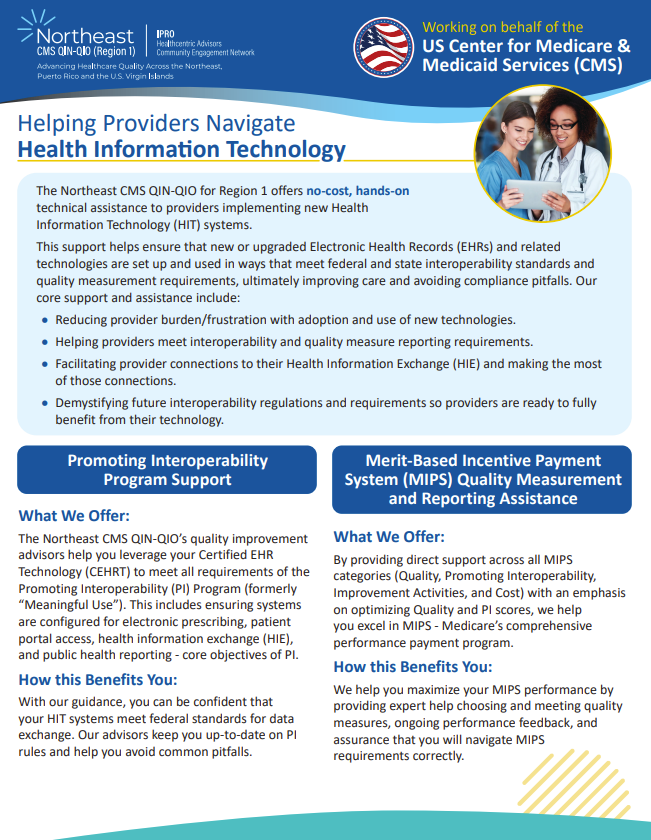
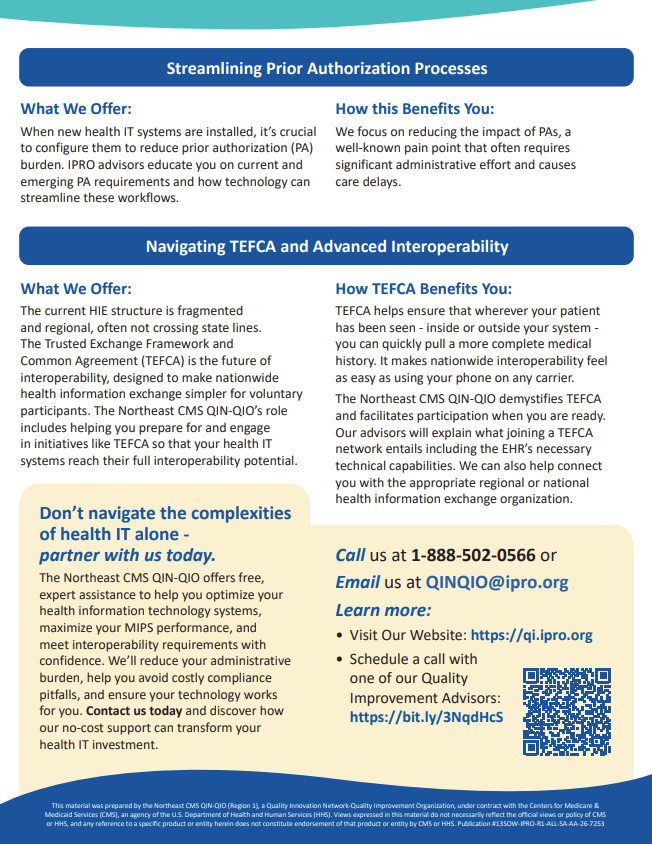
Helping Providers Navigate Health Information Technology